When Staff Report a Phishing Email, What Happens Next?
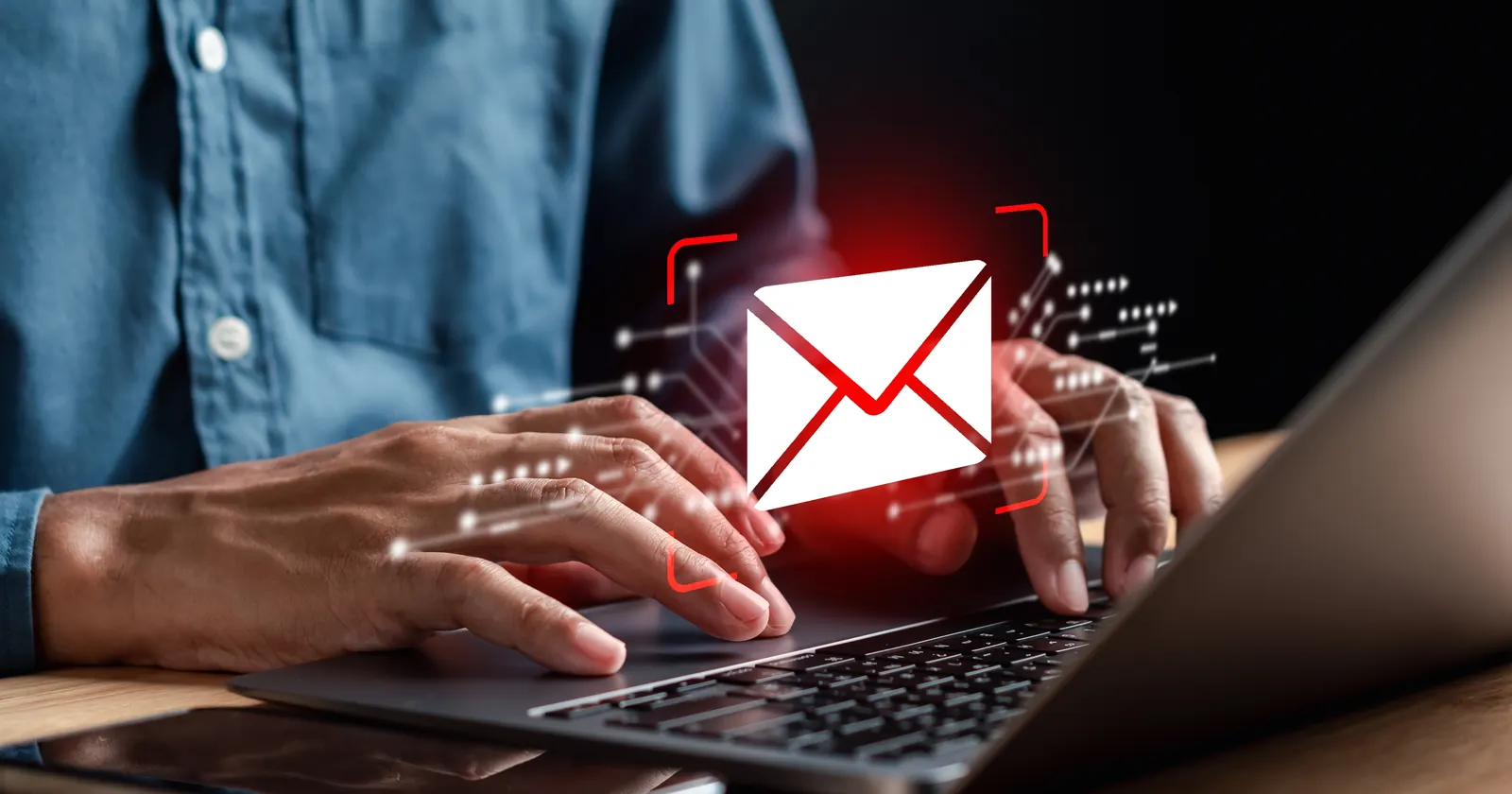
You’ve trained your staff to spot phishing. They’ve learned to hover over links, check sender addresses and question urgent requests. One of them gets a suspicious email and clicks “Report phishing”, exactly as they were taught.
Then what?
In most small and medium businesses, the honest answer is: not much. The report goes to a mailbox or a queue that someone checks when they get a chance. The person who reported it never hears back. They don’t know whether they were right, whether anyone else got the same email, or whether it was worth the effort. After a few reports go into the void, they stop bothering.
That’s a waste of your best early-warning system. Here’s how we close the loop.
Why reported emails matter so much
Your email filter sees every email, but your staff see the ones that got through, which are exactly the ones you most need to know about. A report from a staff member often means:
- a new campaign that detection hasn’t seen before,
- an attack aimed specifically at your business,
- the same email sitting unopened in a dozen other inboxes.
Speed matters. If one person reports a phishing email at 9:05am, and it’s pulled from every other inbox by 9:10am, the colleague who would have clicked at 9:30am never sees it.
Why reports pile up
Investigating a reported email properly takes time and expertise:
- Check the sender, their history with the business and the headers.
- Follow every link safely and look at where it ends up.
- Open any attachments in a safe environment.
- Read the request and judge whether it makes sense.
- Search for other copies across the business.
- Decide, act, and tell the reporter.
That’s 10 to 20 minutes for a skilled analyst, per email. Most reports turn out to be spam or legitimate marketing, so the real threats are buried among the false alarms. Microsoft does offer automated investigation of reported emails, but it’s part of Defender for Office 365 Plan 2 (Microsoft’s AIR overview), which comes with E5-level licensing most small businesses don’t have.
AI triage: every report investigated in minutes
The email security layer we deploy includes an AI analyst that picks up every reported email the moment it’s reported. It works through the same steps a human analyst would:
- Examines the sender. Is this a first-time sender? A lookalike domain? A newly registered domain? Does the display name impersonate someone in the business?
- Reads the message for intent. Is it asking for a payment, credentials, a phone call or a bank change? Is it using urgency or secrecy?
- Investigates every link and attachment. It follows links to their final destination, looks at what the landing page is pretending to be, decodes QR codes and opens up attachments.
- Checks the wider picture. Did other people in the business receive the same thing, or something similar?
- Reaches a verdict and explains it in plain English: malicious, suspicious, spam, or safe, with the evidence that led there.
Then it acts on that verdict:
- Malicious: the email is pulled from every inbox that received it, and the case is escalated to us for follow-up.
- Spam or marketing: closed out, with no analyst time needed.
- Safe: closed out and documented.
- Unclear: handed to a human analyst with the investigation already done.
Every decision is recorded with its reasoning, so nothing is a black box. That’s the same principle behind the readable detection rules the rest of the platform runs on.
Humans stay in the loop
AI triage doesn’t replace human judgement. It takes away the repetitive work so human judgement goes where it’s needed. We review escalated cases, look at patterns across reports, and when a report reveals a new type of attack, we turn it into a detection rule so the next one is caught automatically before anyone has to report it.
That last step is what makes the whole system get better over time: every report makes your protection stronger.
Closing the loop with staff
The other half of the value is cultural. When people get a quick answer (“Thanks, you were right, that was a phishing email and we’ve removed it from 14 other inboxes”), they keep reporting. Reporting becomes a normal, rewarded part of the job, not a chore that disappears into a void.
Over time you end up with a team that’s actively watching for threats, backed by a system that responds in minutes. That’s a far stronger position than a filter alone, or training alone.
Getting the report button right
For this to work, reporting has to be easy:
- Use the built-in Report button in Outlook and Microsoft 365, configured to send reports to the right place (Microsoft’s guide to user-reported message settings).
- Make it the one obvious action. Staff shouldn’t have to forward emails as attachments or remember an address.
- Train with it. Pair reporting with regular awareness training. Our free phishing awareness quiz is a quick way to see where your team is at.
How we help
AI triage of reported emails is part of the email security layer we run alongside Microsoft 365 or Google Workspace, as part of our cyber security services. For the full picture of how it fits with Microsoft’s own protection, read what Microsoft 365 still lets through.
If your staff report phishing and never hear back, get in touch and we’ll show you what closing the loop looks like.